The Problem
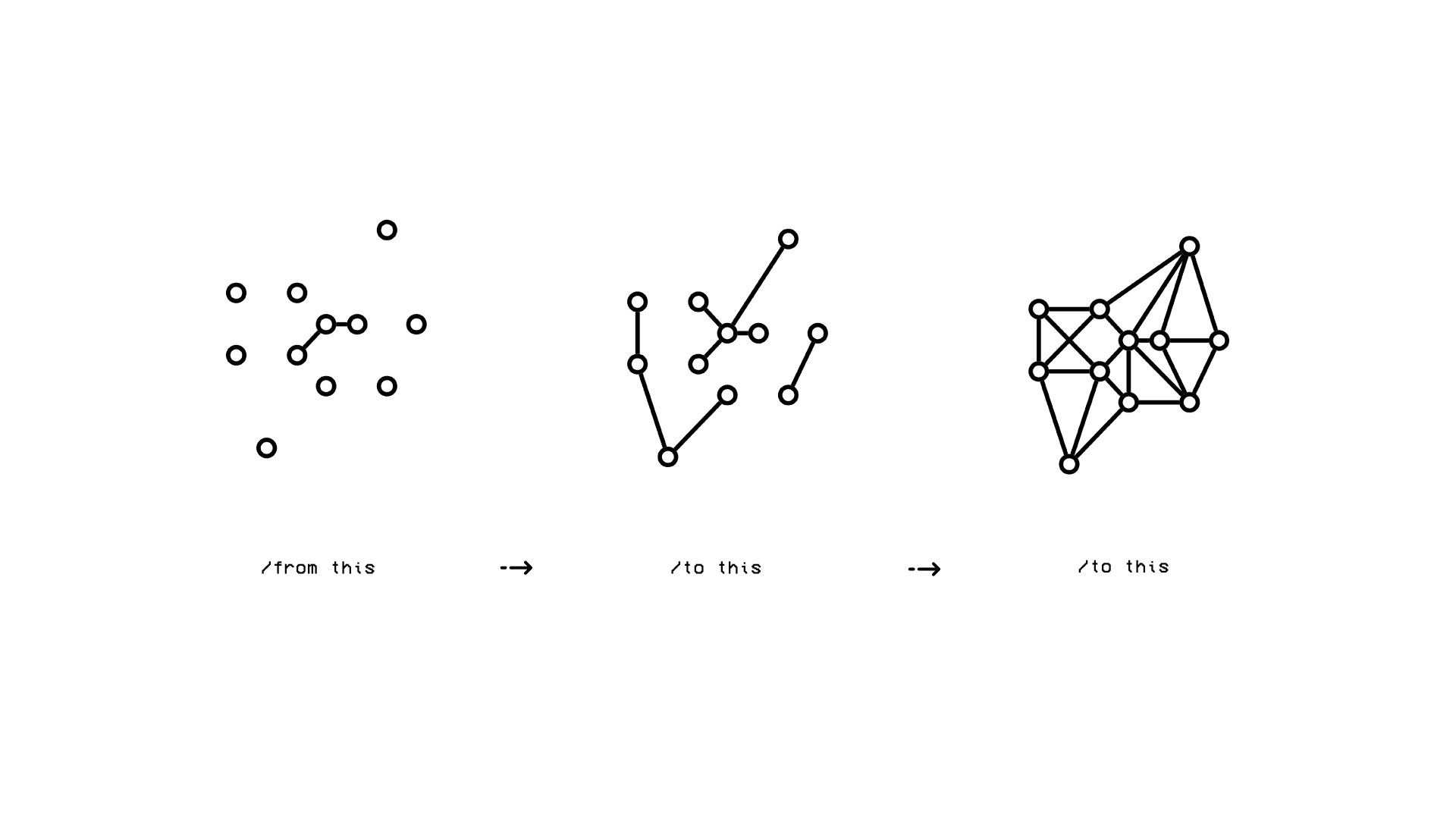
Governments don’t fail at digital transformation because of bad technology. They fail because of silos. Each agency digitises at its own pace, builds its own stack, guards its own data. The result is a landscape where some agencies operate like modern tech companies while others are still printing forms. Citizens experience the worst of both worlds — a digital front door that opens into an analogue hallway.
In 2018, I joined a Southeast Asian government’s Smart Nation initiative. The ambition was sweeping: use emerging technology to connect government services and improve the connected citizen experience across the board. The reality on the ground was more sobering. Dozens of agencies at wildly different levels of digital maturity, with no shared data layer, no common protocols, and no unified model for how a citizen interacts with government.
The question that framed the entire engagement: How does a government become an API — exposing its services as composable, connectable modules — so that citizen initiatives stop being isolated projects and start becoming a connected national experience? This is systems thinking applied to governance — what Donella Meadows describes in Thinking in Systems as redesigning the structure of the system, not just its outputs.
The Approach
Start With the Willing
This was a massive project and personally challenging — for the first time, I was working on a complex G2B2C model (government to business to citizen). I had to read extensively about government systems and how they operate before embarking on the project. We started with constraint mapping, not feature lists. The scale was national. The stakeholder landscape was enormous. Trying to boil the ocean would guarantee failure. We focused on understanding digitisation and digitalisation maturity levels across agencies, then made a deliberate strategic choice: focus exclusively on agencies that had already reached a high degree of digital maturity. Build a working model with the willing, then scale it to the rest. This was not a shortcut — it was sequencing. Prove the model where friction is lowest, then use that proof to pull the lagging agencies forward.
The Four Personas — and the One That Shouldn’t Exist
We identified four key personas in the ecosystem. Government agencies — the backbone of regulatory and compliance processes. Business owners — entrepreneurs trying to incorporate or relocate, drowning in paperwork and multi-agency dependencies. Brokers — intermediaries that business owners hired to navigate the bureaucratic maze. And finally citizens — the end users of government services.
The very existence of the broker persona was the clearest signal of system failure. When citizens need to pay someone to interface with their government, the experience is fundamentally broken.
But here’s what made the broker problem interesting from a game theory perspective: the broker persona was a Nash equilibrium. In the existing system, hiring a broker was the rational choice for every business owner — the system literally incentivised intermediaries. You can’t remove brokers by telling people not to use them. You have to change the game: make the government interface so simple and connected that the rational choice shifts. We weren’t building technology — we were redesigning incentive structures.
Government as an API
The strategic goal was to design a connected experience where government agencies interface directly with business owners — making brokers obsolete not by banning them, but by making them unnecessary. Brokers exist because government is fragmented and disconnected, which creates friction for business owners. Remove the friction, and the broker’s value proposition dissolves. This meant treating government functions as modular, composable APIs — the “Government as an API” framework. In my research, Estonia was already doing this. Each agency’s services would become programmable endpoints. We were conceptualising the future in agentic terms — building the foundation for AI agents (chatbots was the prevalent term at the time) to eventually orchestrate across agencies, handling tasks like licence applications, compliance checks, and documentation processing without requiring the citizen to understand which agency does what. Agentic AI in government, years before “agentic” became a buzzword.

What We Deliberately Didn’t Build
The decisions about what NOT to build mattered as much as what we built, especially when the vision of AI agents was entertained:
- Didn’t try to digitise all agencies at once. We started with the willing — agencies already at high digital maturity. Deliberate exclusion, not oversight. Trying to move everyone simultaneously would have moved no one. In hindsight, thin-slicing was easy. The real challenge was the sequencing.
- Didn’t build a monolithic government portal. Composable APIs instead. Each agency retained independence while participating in a connected layer. The composable government architecture meant no single point of failure, no single point of rigidity.
- Didn’t try to eliminate brokers directly. We designed a system that reduced dependency on them. The system resolved the incentive, not the symptom. Attacking brokers head-on would have been political warfare — destabilising the existing Nash equilibrium without a better one to replace it. Slowly introducing features to make them redundant was part of the systems design.
- Didn’t build for a specific future. We built for composability — which includes unknown futures. This turned out to be the most important decision we made.
The Black Swan That Proved the Architecture
This was a multi-year project moving slower than regular enterprise projects due to various dependencies. We proved our concept with a thin slice of the system and worked out a few workflows.
Then COVID hit.
We didn’t predict it. Nobody did. But here’s what mattered: we had designed a system that didn’t need to predict what would hit it.
The pandemic forced a comprehensive re-evaluation mid-stream. Entirely new components needed to exist — cashless payment systems, vaccine passports, contact tracing, tracking, reporting, remote authentication, automated workflow adjustments, real-time analytics. These weren’t edge cases or nice-to-haves. They were urgent national requirements that didn’t exist in prior roadmaps.
In a monolithic architecture, this would have been catastrophic. A rebuild. A multi-month delay while the country needed solutions in weeks.
Instead, these new components plugged in. The composable architecture we’d built — where each agency’s services were independent modules communicating through shared protocols — had room for components that hadn’t been imagined when the architecture was designed. Vaccine passports connected to the same citizen identity layer. Contact tracing used the same data-sharing protocols. Contactless payments integrated with the existing transaction modules.
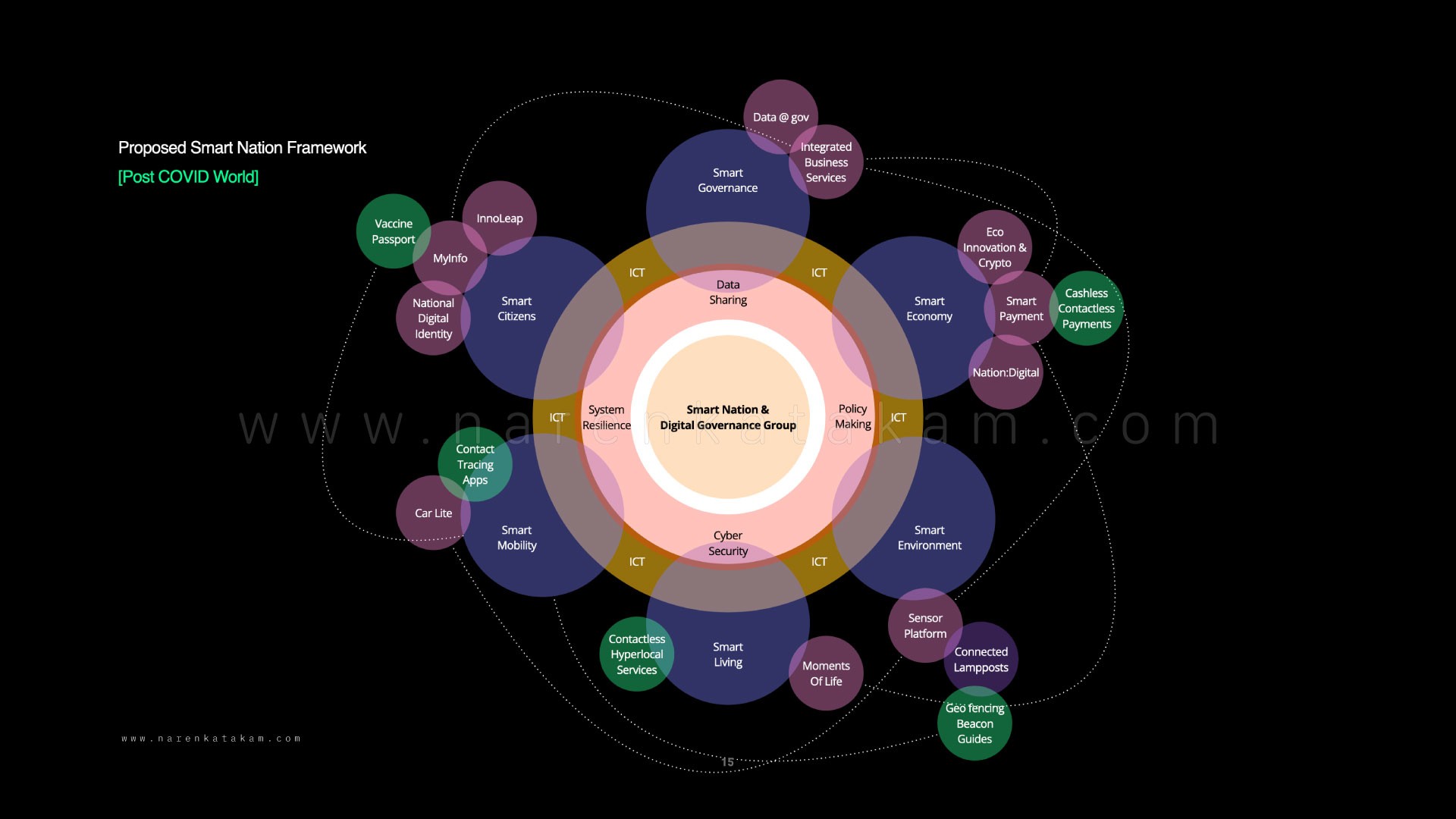
The system didn’t just survive the shock. It gained from it. Each new COVID component strengthened the overall platform, proved more connection points, validated more protocols. The architecture was stronger AFTER the crisis than before it — not because we’d predicted the pandemic, but because composability means you’re designing for the unknown by default. When stress arrived, the system absorbed it and grew.
This is the core insight: you cannot predict black swans — Nassim Nicholas Taleb made that case definitively in The Black Swan. But you can design systems where black swans become integration opportunities rather than architectural failures. Kenneth Stanley and Joel Lehman make a complementary argument in Why Greatness Cannot Be Planned: the most important outcomes are the ones you can’t aim at directly. Build for composability — for the unknown — and disruption becomes a feature.
What We Built
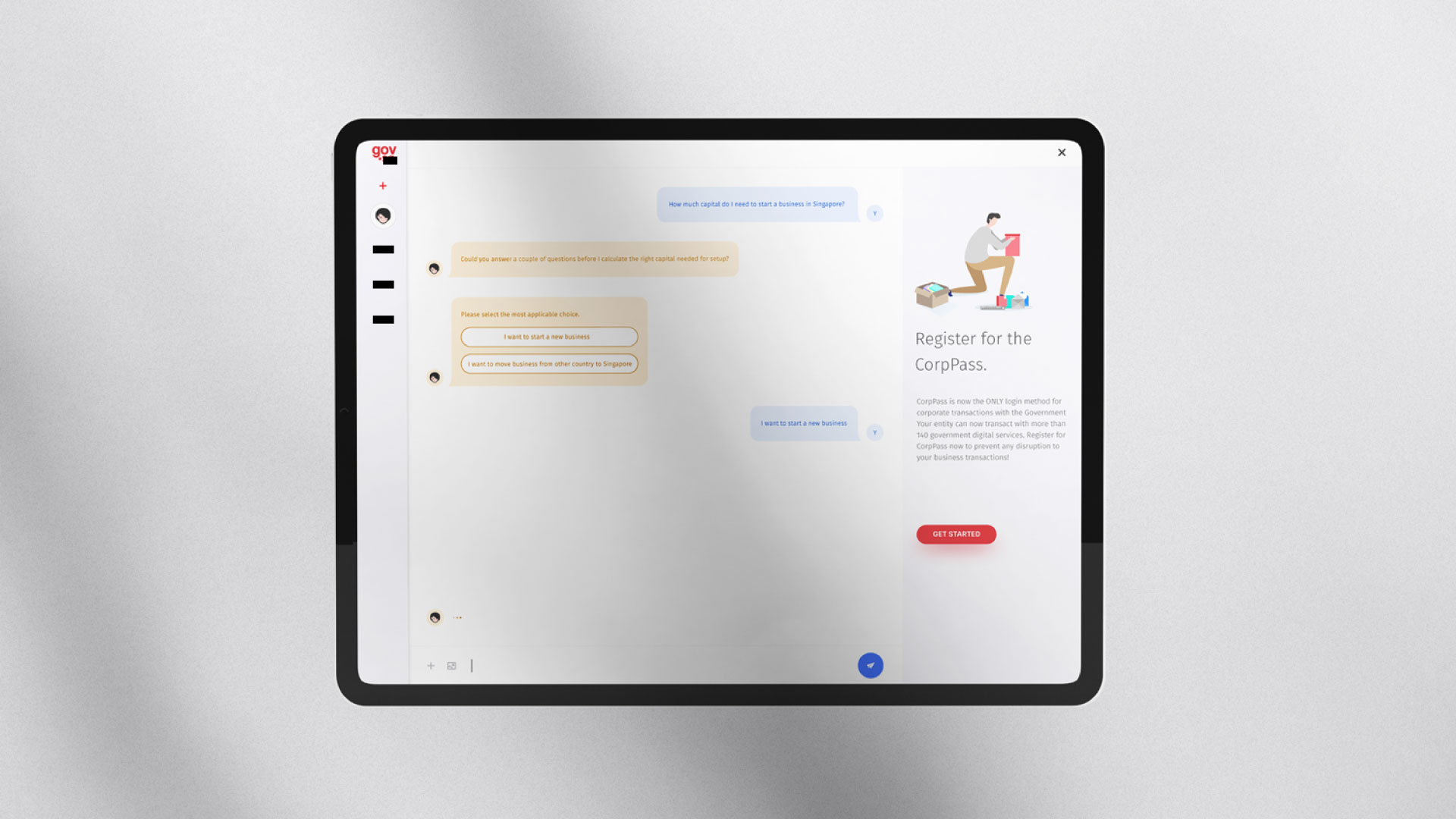
The core product was a connected digital platform, thin-sliced with an intelligent conversational interface built on the Rasa NLP stack. Business owners could type natural language queries about incorporation, and the system would parse intent, route across agency-specific agent modules, and guide them through multi-step processes spanning multiple government bodies to provide the most updated information, reducing dependency on brokers to provide the same — all within a single conversational flow.
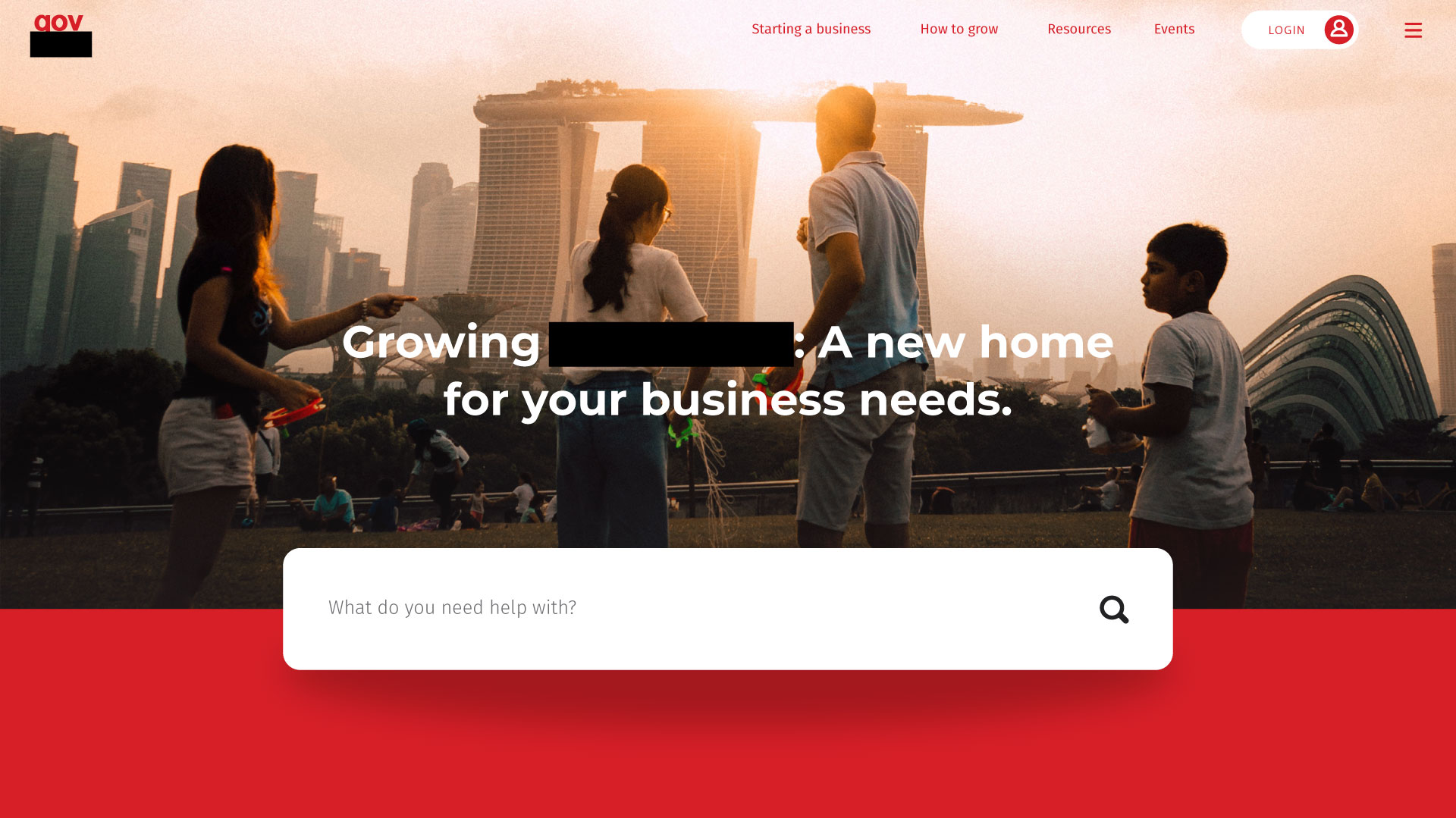

The platform included a unified government portal (desktop and mobile) with search, a chatbot interface for guided onboarding, a tax computation module with disambiguation across corporate, property, and GST domains, event discovery for investor and fundraising opportunities, and cross-border integration capabilities for businesses expanding from neighbouring countries. Each feature was backed by the “Government as an API” architecture, where agency-specific agent modules handled their domain logic independently but communicated through shared protocols.

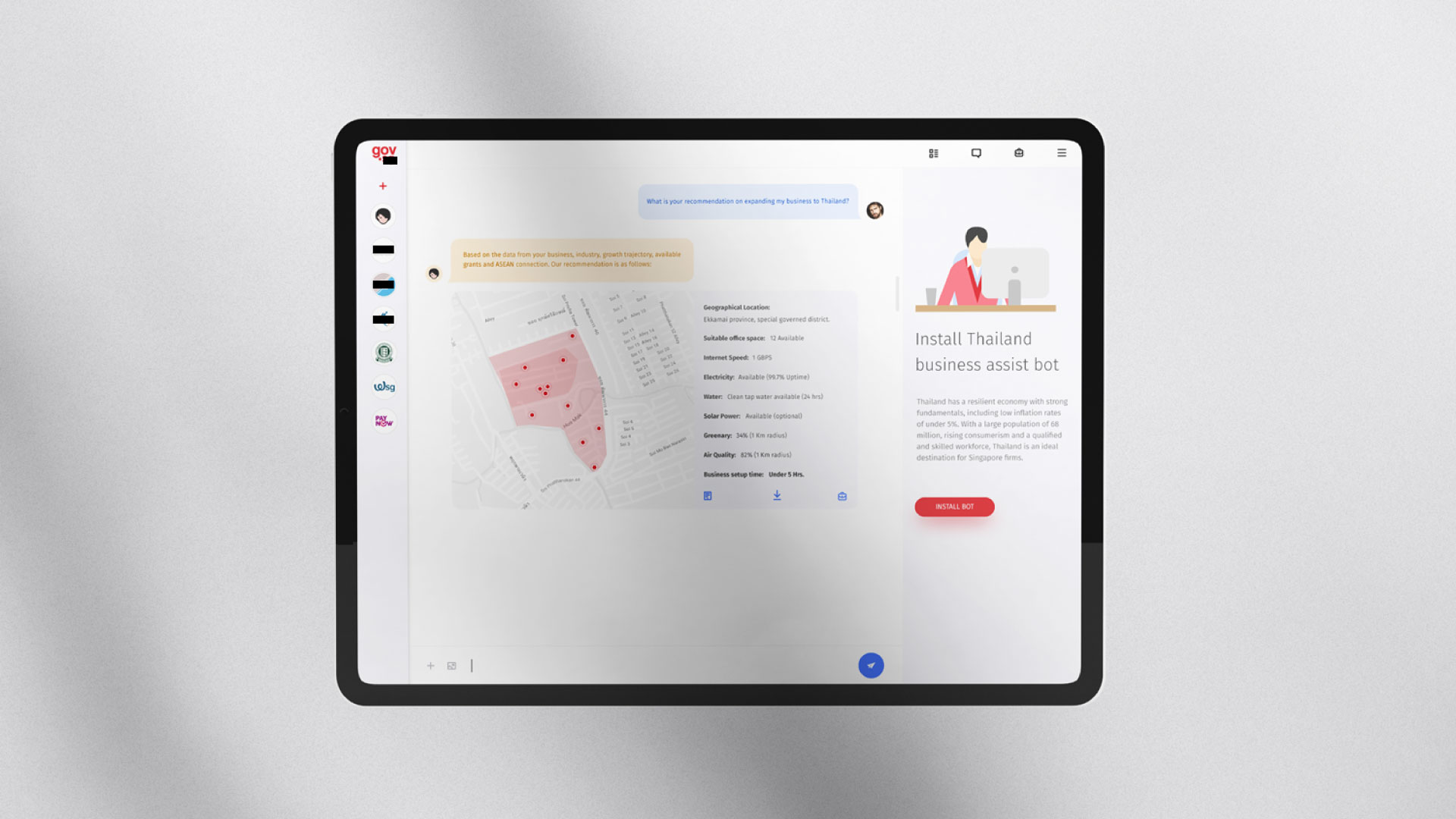
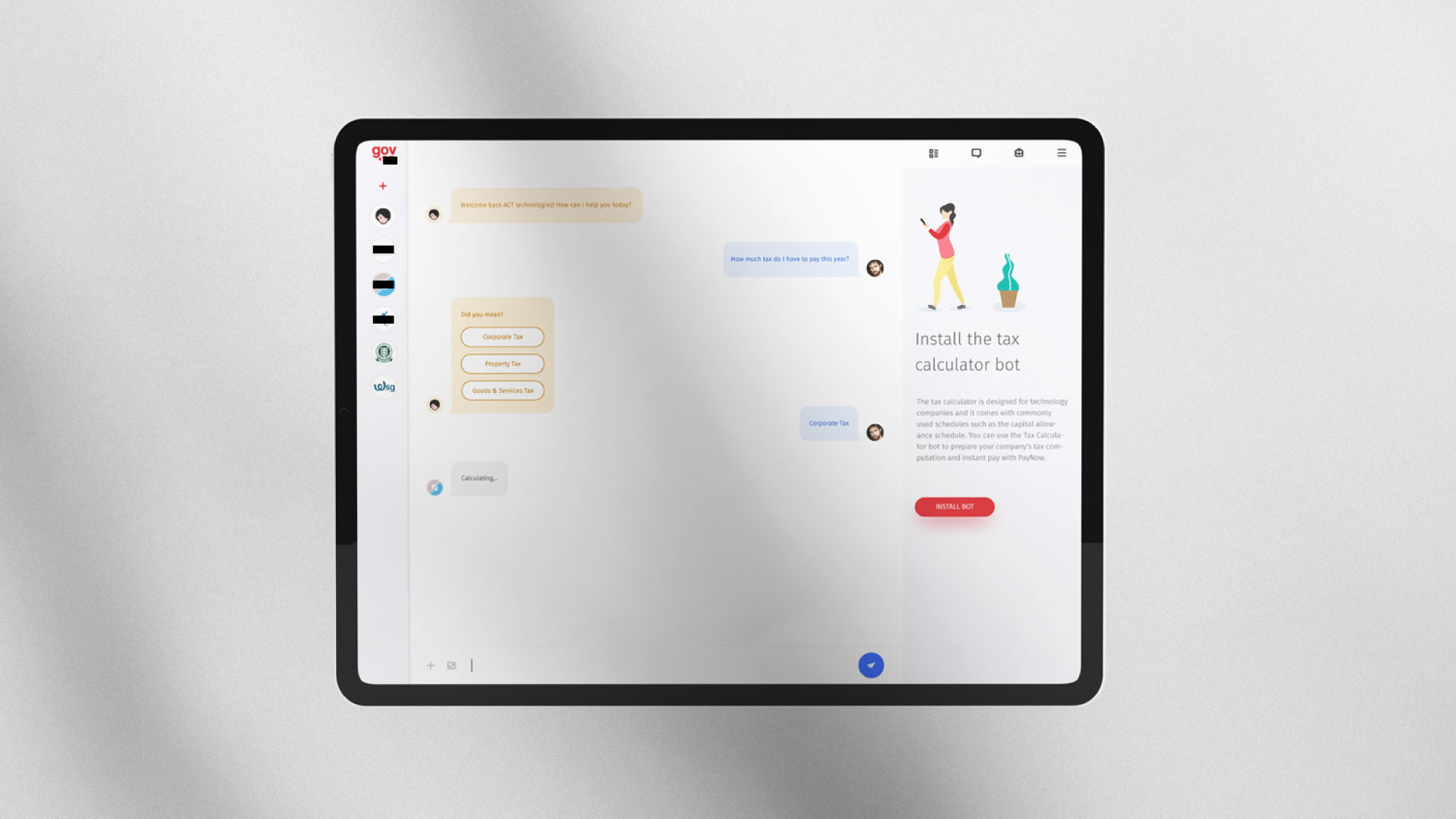
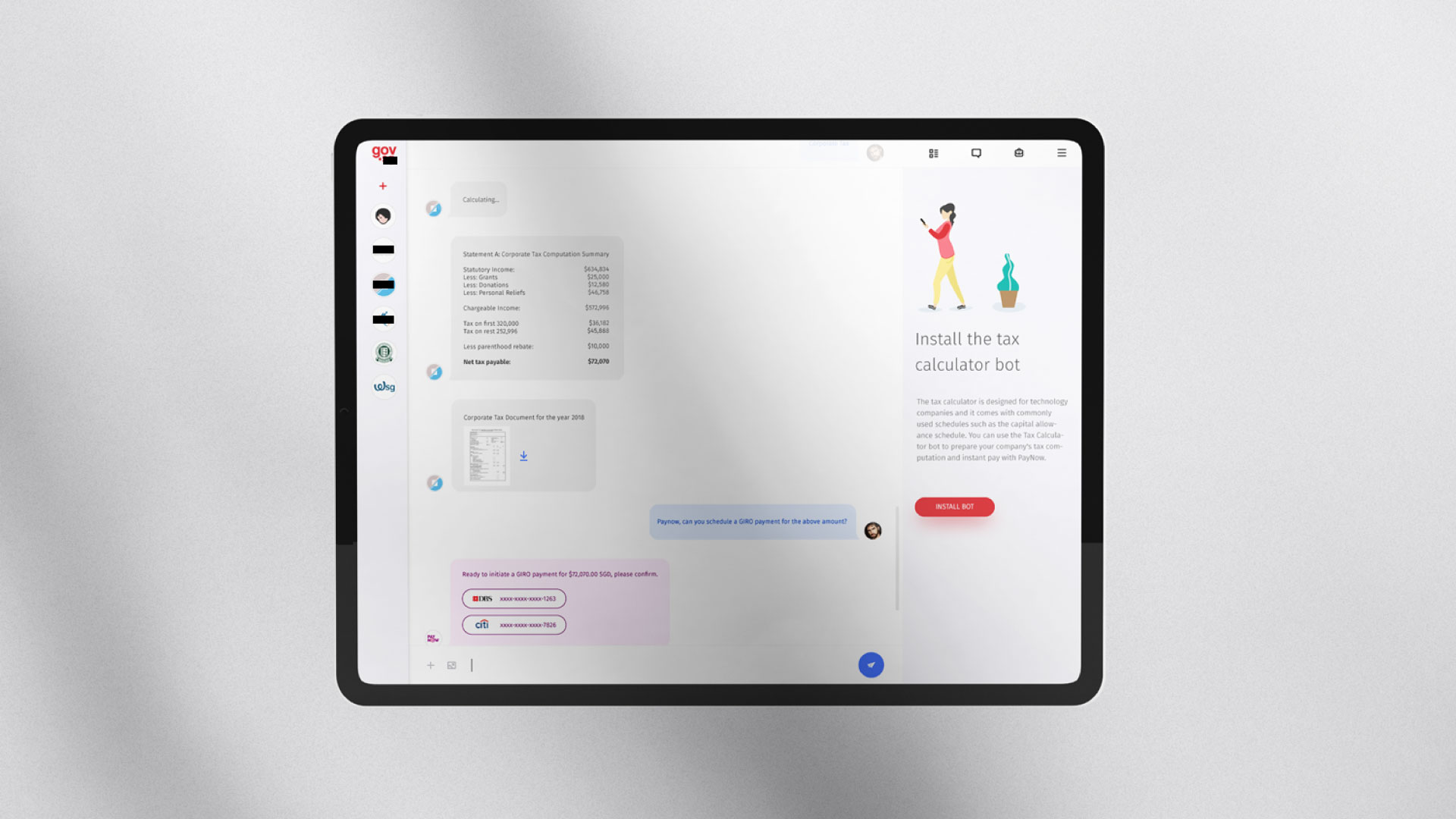
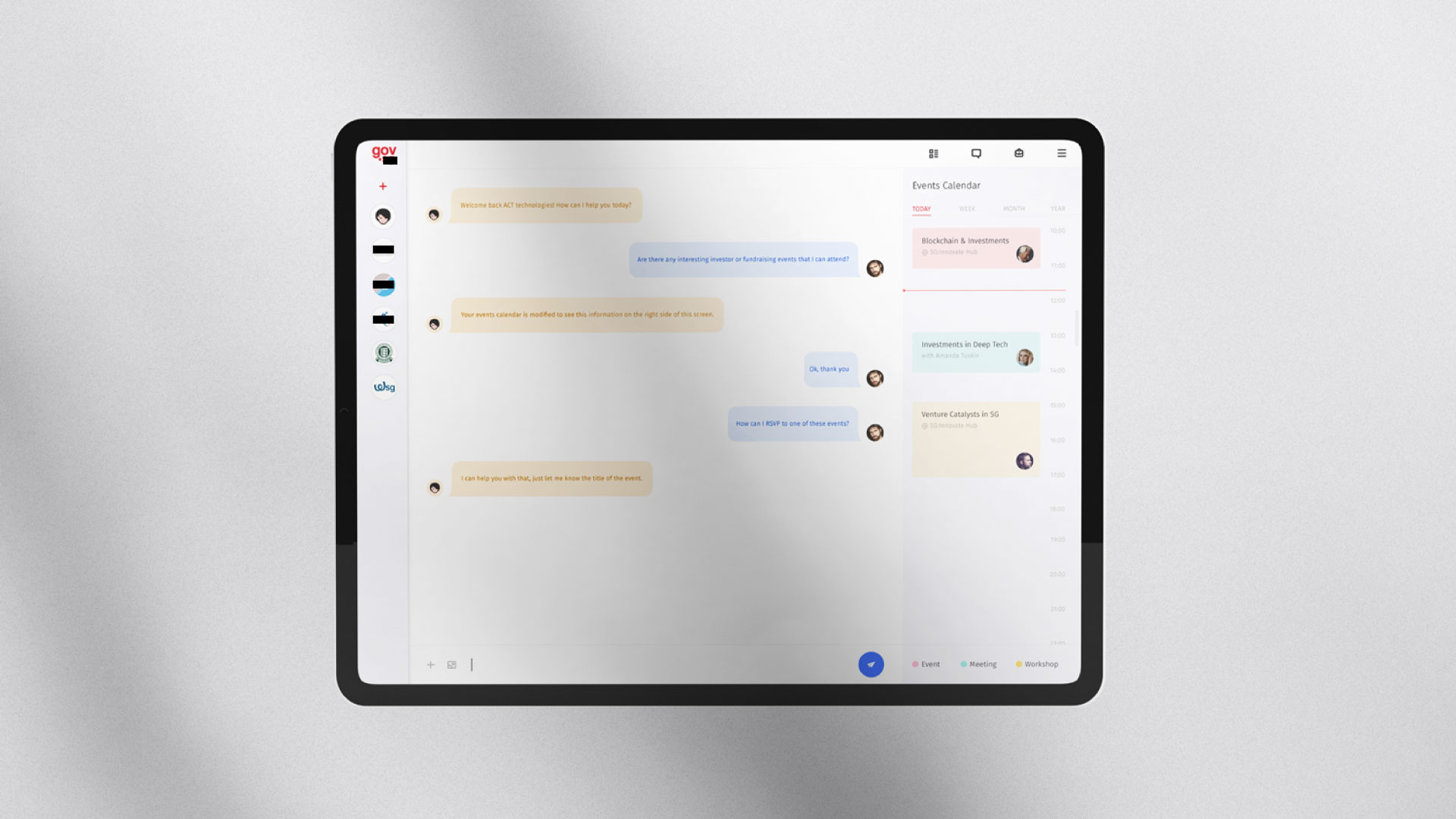
The design process was deeply collaborative — intensive workshops with product owners and technical teams from multiple agencies, extensive user research across all three personas, and iterative prototyping cycles. Every prototype went through stakeholder feedback loops before the next iteration began.
Results
- 7% increase in businesses successfully incorporated within pilot agencies
- 40% improvement in citizen satisfaction scores (CSAT), with significant reduction in broker-related costs for business owners
- Cross-agency data sharing operationalised for the first time, with shared protocols reducing redundancy and enabling real-time information exchange
- COVID-response components integrated into existing architecture without requiring a rebuild — the composable design didn’t just hold under a black swan, it got stronger
- Broker dependency reduced as the connected experience shifted the Nash equilibrium — the rational choice for business owners moved from “hire a broker” to “use the platform”
- Scalable foundation established for future agentic AI capabilities within the Smart Nation framework
What I’d Do Differently Today
The Failure Boundary: Two-Tier Government
The “start with the willing” strategy has a failure mode: two-tier government. If the lagging agencies never catch up, you’ve created a digital divide within government itself — some agencies fully connected, others permanently analogue. We underinvested in the scaffolding for second-wave adoption. The strategic sequencing was right, but the bridge to universal adoption needed more design attention. A more robust change management strategy, with targeted training and dedicated support for less digitally mature agencies, would have accelerated the second wave.
Technology Leaps
With today’s technology, the agent layer would be radically different — what I explored in From Chaos to Clarity: Crafting a Comprehensive AI Strategy. LLM-based agents would replace the rule-based Rasa modules, enabling genuine natural language understanding instead of intent-entity parsing. The conversational interface could handle ambiguity, switch contexts fluidly, and anticipate needs through personalisation. The “Government as an API” framework remains sound — arguably it was ahead of its time — but the agent layer on top of it would be orders of magnitude more capable. Multi-agent orchestration frameworks that exist today would have let us build in months what took us years to prototype. The composable government architecture was always the hard part. The AI was just the interface.
The Compounding Effect
The composability principle — designing systems as independent, API-first modules that can absorb unknown future requirements — became a pattern I scaled to other domains. Two years later, when designing a 9-layer developer platform for an insurance company, the same architectural philosophy applied: composable layers that strengthen each other and absorb disruption independently. The Smart Nation engagement proved the principle. Everything after it scaled it.
Key Takeaway
The hardest part of government digital transformation isn’t the technology. It’s designing a composable architecture that respects institutional boundaries while dissolving them from the citizen’s perspective. Get the system design right — build for composability, not prediction — and the technology becomes a detail. Black swans become integration events. Brokers become unnecessary. And the system gets stronger every time something unexpected hits it.
FAQ
How do AI agents improve government digital transformation?
AI agents act as orchestrators across fragmented government services. Instead of citizens navigating multiple agency portals, agents handle cross-agency communication, route requests to the right departments, and guide users through multi-step processes in a single interface. The key is designing the underlying composable government architecture as APIs first — agents are only as good as the system they sit on top of.
What does “Government as an API” mean in practice?
It means treating each government agency’s services as modular, programmable endpoints that AI agents orchestrate into citizen-facing experiences. Rather than building monolithic portals, you create a layer where agency functions — licence checks, tax computations, compliance verification — are accessible as standardised services. AI agents or applications can then combine these services dynamically based on what the citizen actually needs. This is what makes the connected citizen experience possible at national scale.
What is the biggest challenge in Smart Nation initiatives?
It’s rarely the technology. The primary challenge is bridging the digital maturity gap between agencies. Some have modern APIs and data pipelines; others are still digitising paper processes. The strategic choice of which agencies to start with, and how to design an architecture that accommodates different maturity levels, determines whether the initiative scales or stalls. Change management and institutional alignment matter more than any specific technology choice.
How does composable architecture handle unexpected disruptions?
By design. When every service is an independent module communicating through shared protocols, new requirements — even ones nobody predicted — can plug in without breaking the existing system. During COVID, entirely new components (vaccine passports, contact tracing, cashless payments) integrated into our Smart Nation architecture without a rebuild. The system didn’t just survive the disruption — it got stronger from it.