July 24, 2024
The Three Waves of AI: Navigating Technology, Usability, and Safety.
“The future is already here. It’s just unevenly distributed.”
— William Gibson
The current explosion of AI, specifically Generative-AI (GenAI) at its rapidly evolving advancements indicates that AI has long moved out of its hype cycle. What makes me say this? Well, even if AI development were to be paused at this moment, it would still impact how we live, how we work, and how we continue to learn. It has already altered our basic digital behavior models and work-related mental models. The current foundational and frontier models have powered the proliferation of use cases at the enterprise level. While we try to get a grip on growing use cases at current advancements, let’s look at what will come beyond the exploration of use cases.
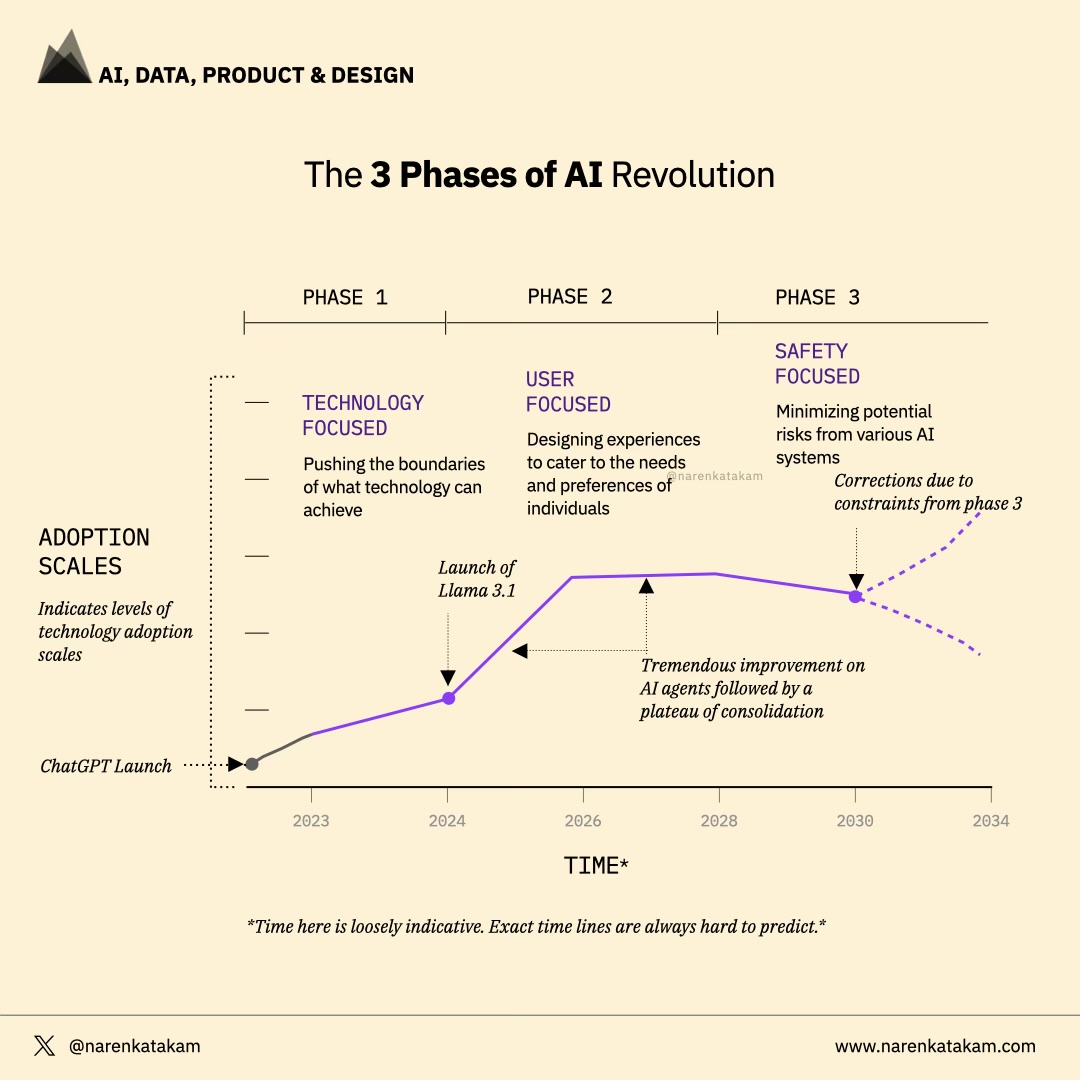
It is impossible to predict with absolute certainty the ultimate impact that AI systems will have on humanity, given the complexity and rapid evolution of this technology. What we have seen so far is merely a glimpse of AI’s potential capabilities at various levels. Based on these glimpses and our observations from previous technology adoption cycles, we can reasonably ideate on three critical phases that will characterize the AI revolution.
PHASE I: TECHNOLOGY FOCUS
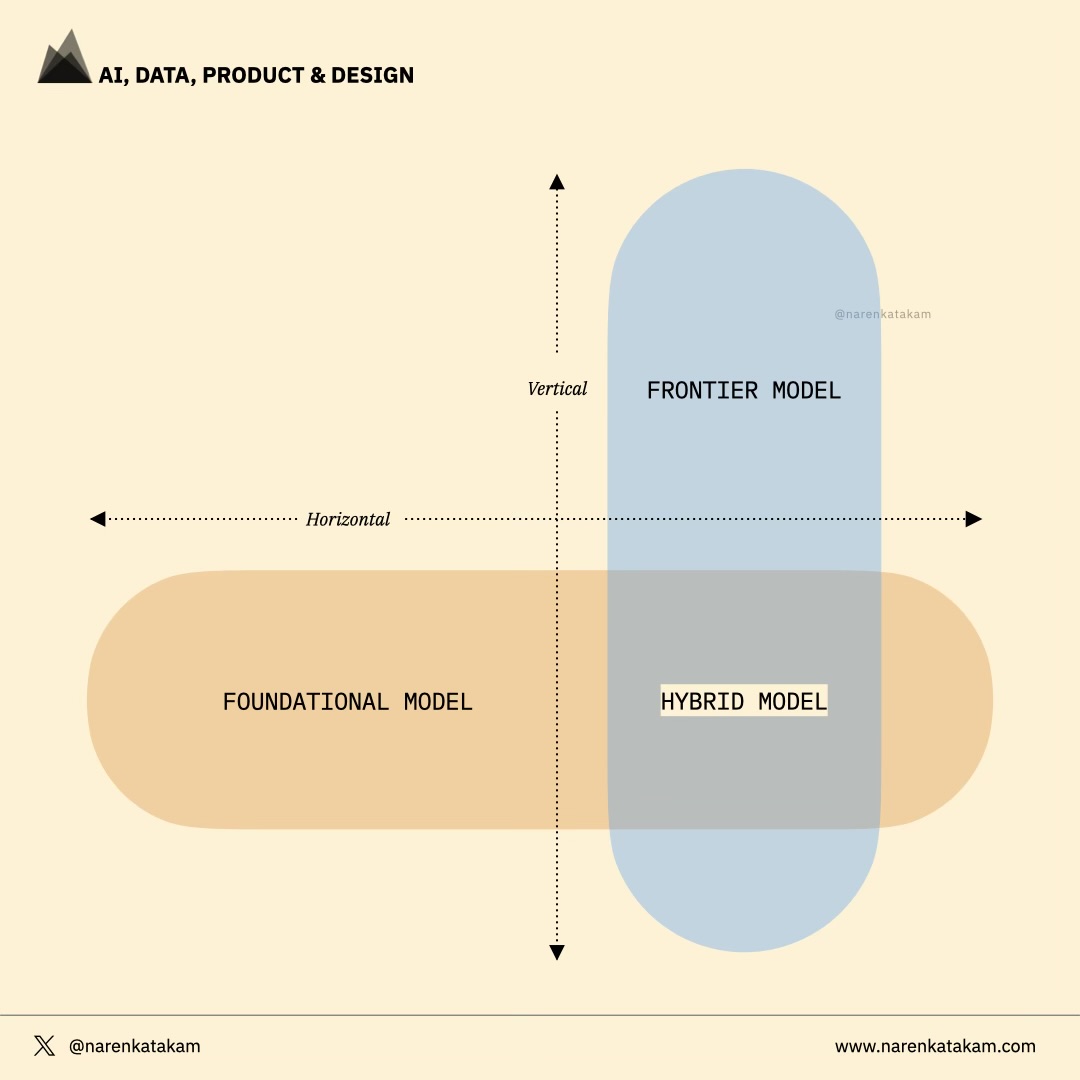
The first phase of this revolution will be predominantly focused on the technological advancements themselves. This phase will involve significant research and development, leading to breakthroughs in AI algorithms, machine learning techniques, and the creation of more sophisticated and powerful AI systems. During this period, the primary attention will be on enhancing the technical aspects of AI, pushing the boundaries of what these systems can achieve. This phase will also see a consolidation of foundational models (horizontals), frontier models (vertical), and hybrid models (intersections).
Let me try to define what a foundational model and a frontier model are before hypothesizing what the intersection of these two looks like:
Foundational model: A foundational model is a large-scale, pre-trained model that serves as a base for various AI applications. It provides general-purpose capabilities and can be fine-tuned for specific tasks.
E.g.: GPT4, BERT, etc.
Frontier model: A frontier model is a result of the latest advancements in AI research, pushing the boundaries of what is possible. These models are often state-of-the-art and showcase cutting-edge technology.
E.g.: AlphaGo, DALL-E 2.
Hybrid model: A hybrid model is the intersection of foundational and frontier models. Leveraging the broad adaptability of foundational models (horizontal) with the state-of-the-art advancements of frontier models (vertical) to create more specialized and highly effective solutions.
E.g.: Enhancing a foundational language model like GPT-4 with the advanced reinforcement learning techniques from AlphaGo to improve its ability to generate strategic and context-aware content for interactive storytelling or advanced game-playing scenarios.
PHASE II: USER FOCUS
The second phase will shift the focus towards the user. This phase not only sees widespread AI adoption but also redefines our interactions with intelligent systems. AI begins to blend with human intuition and needs. Interfaces will play a critical role in this phase. Interfaces will become seamless. They will connect human intent with machine capability. Human-machine interaction evolves beyond physical screens and touch interfaces. We will see new modes of interaction, more gestures, more voice, and a combination of both voice and gestures dissolving barriers between human cognition and AI. The emphasis of this phase will be on making AI more accessible, user-friendly, and beneficial to a broader audience to accelerate adoption.
Technology development now prioritizes user needs, promoting inclusivity through custom interfaces for diverse accessibility requirements. AI products will become more perceivable, operable, efficient, and effective across use cases and various sectors and industries.
This phase redefines productivity and creativity. AI augments human capabilities, allowing deeper exploration of the arts, science, and societal challenges. However, we must ensure AI enhances rather than diminishes human qualities like empathy, creativity, and ethical reasoning. This phase shapes AI as a partner in human progress, creating interfaces that harmonize human intent and machine capability, advancing both technology and humanity.
PHASE III: SAFETY FOCUS
The third and final phase might center around safety themes. As AI becomes robust, more deeply embedded, and integrated into society, concerns about ethical considerations, security, and the potential risks associated with short-term and long-term use of AI will come to the forefront. This phase will involve establishing comprehensive regulatory frameworks, ethical guidelines, and safety protocols to ensure that AI systems are developed and deployed responsibly. The focus will be on minimizing the potential negative impacts of AI while maximizing its benefits, ensuring that the technology is used in a way that is safe and beneficial for all of humanity.
An inflection point may occur as regulations are enforced, temporarily slowing innovation and offering a chance for recalibration. Innovators will try to align visions with societal needs, policymakers will craft nuanced frameworks, until better ways are found to progress. The inflection point also offers a chance to transcend current paradigms and achieve a symbiotic relationship between human intuition and machine intelligence. Navigating this wisely could unlock a new era where AI amplifies human potential and addresses global challenges. If we falter, we risk stifling AI’s transformative potential.
The path forward requires human-centric thinking, prioritizing transparency, accountability, and inclusivity in AI systems. At this crossroads, we must be visionaries again, envisioning a future where AI and humanity can progress together. The choices we make today will shape the essence of humanity in an age of intelligent machines.
In summary, the AI revolution unfolds through three critical phases: technological advancement, user-centric adoption, and safety-focused regulation. Each phase is crucial in shaping AI’s impact on our physical and digital world.